
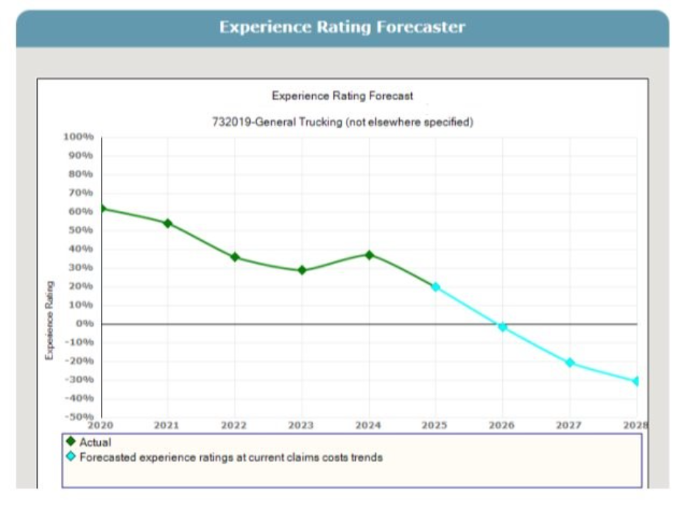
In 2020, DMI partnered with a British Columbia-based client that had limited visibility into their WCB claims experience, lacked a formal modified return-to-work program, and was facing a 61.9% surcharge.
This meant they were paying $8.11 compared to the base rate of $5.01, representing an additional $113,050 in annual costs.
Over five years of partnership with DMI (and ongoing support) the organization reduced its experience rating by 42.1% and is forecasted to move into a discounted rate position by 2027.
Each provincial Workers Compensation Board (WCB) uses its own methodology to calculate employer rates, the amount employers must pay into the workers' compensation board to fund workplace injury coverage, and most follow a similar model that combines industry pooling and experience rating.
Understanding the difference between these two components is the first step in understanding how your organization's rates are determined.
Industry Rates
Organizations are grouped based on the nature of the work they perform into industry groups or classification units. The collective claims experience of all organizations within that group is pooled, and a base rate is reviewed annually. Individual organizations do not have direct influence over this portion of the rate.
Experience Rating
Experience rating reflects your organization's individual claim performance compared to others in your industry group. Organizations with lower claim costs than the industry average may receive discounted rates, while those with higher claim costs may face surcharges. Experience rating is typically based on the previous three to six years of claims history, depending on the province.
Why Does Experience Rating Matter?
Experience rating is more than just a number on your WCB statement. It directly impacts your organization's costs, risk profile, and overall workplace safety performance. Here's why it matters:
1. Affects how much you pay in Premiums
Experience rating adjusts your WCB premiums based on your past claim history.
- Good experience = means fewer and less severe claims that lead to lower premiums or rebates
- Poor experience = more costly claims that lead to higher premiums or penalties
2. Reflects your workplace safety performance
Experience rating is essentially a scorecard of your organization's health & safety effectiveness.
- High claim frequency or severity signals systemic safety issues
- Low claims indicate strong safety practices, training, and culture
3. Drives accountability and behaviour
Because money is tied to outcomes, experience rating encourages:
- Managers to prioritize safety programs
- Employees to follow procedures and report hazards
- Organizations to invest in prevention and return-to-work programs
4. Emphasizes the importance of Return-to-Work programs
WCB systems reward organizations that:
- Get injured workers back to work quickly and safely
- Offer modified duties
- Reduce claim duration
5. Helps identify hidden risk patterns
Analyzing your experience rating helps uncover:
- High-risk departments or job roles
- Recurring injury types
- Gaps in training or supervision
6. Supports strategic decision making
- Justify investments in safety programs
- Evaluate ROI on prevention initiatives
- Forecast future liabilities
Where DMI Can Make a Difference
DMI's Occupational Claim Services recognize the importance of understanding and influencing your experience rating. Because claim frequency, severity, and duration are core drivers of your rating, proactive claims management can have a meaningful impact.
Our team of Injury Management Specialists and Kinesiologists understand the unique WCB policies across each province and help organizations shift from a reactive approach to a more proactive strategy. DMI can help organizations:
- Reduce claim duration
- Control claim cost severity
- Improve claims management consistency
- Identify cost drivers and recurring risk patterns
- Develop or strengthen return-to-work programs
- Enhance the employee experience throughout the claims process
- Reduce the risk of claim escalation
Your Experience Rating Is Something You Can Influence
Your experience rating is not just a number. It reflects how effectively your organization prevents, manages, and responds to workplace injuries.
Organizations that take a proactive approach do more than reduce premiums. They create safer workplaces, stronger internal processes, and more sustainable long-term outcomes.